How to Top Up Boiler Pressure: Check Your Model First
Check your boiler’s user manual before topping up. Filling controls and pressure limits differ between models. Use only the controls the manufacturer identifies for the householder, with the heating off and the system cool. Stop if you cannot identify them confidently.
By Plumber Leicester Pro editorial team · Checked . General guidance; use your appliance instructions for your model.
In this guide
| Arrangement | What to check in your model instructions |
|---|---|
| External loop | The identified loop, connection method and householder valve sequence. |
| Keyed filling link | The exact key, access point and manufacturer sequence. |
| Keyless control | The model-specific built-in control and stopping instructions. |
| Unclear arrangement | Stop and ask the installer; do not identify a valve by colour alone. |
This guide helps you recognise the filling arrangement, follow the right instructions and decide when a pressure problem needs an engineer. It applies to a sealed heating system; an open-vented system is different.
Before you start — what you need to know
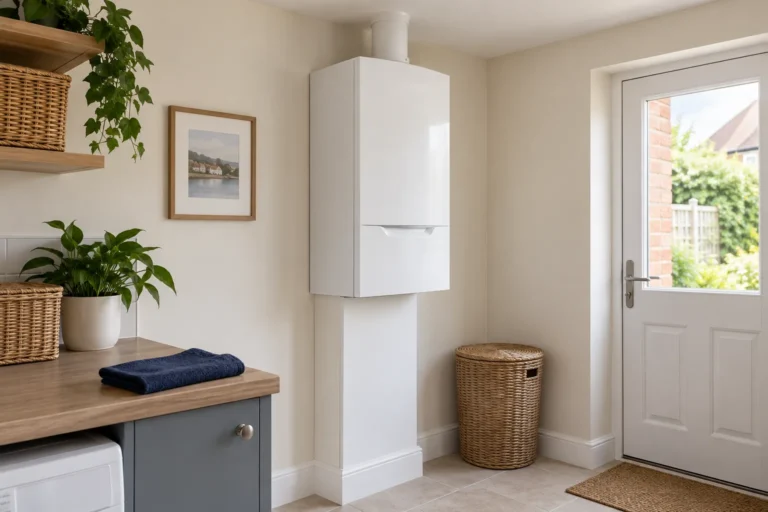
- Find the exact model on the boiler’s visible label or paperwork, then open its user instructions. Do not remove the casing to find it.
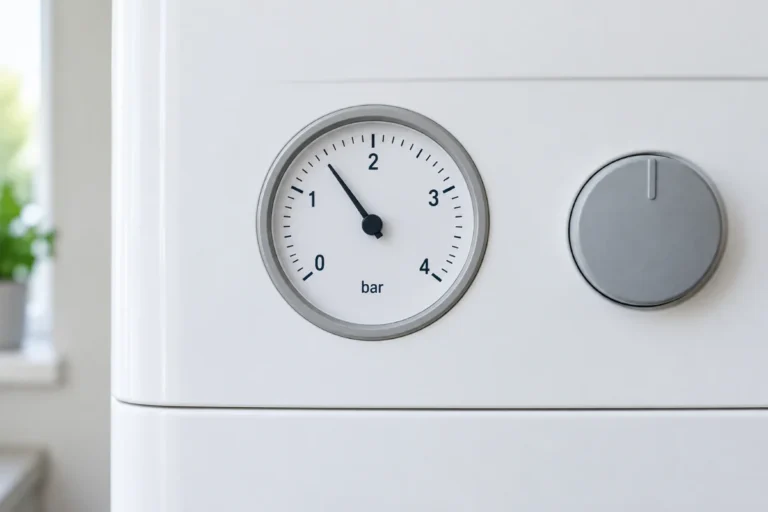
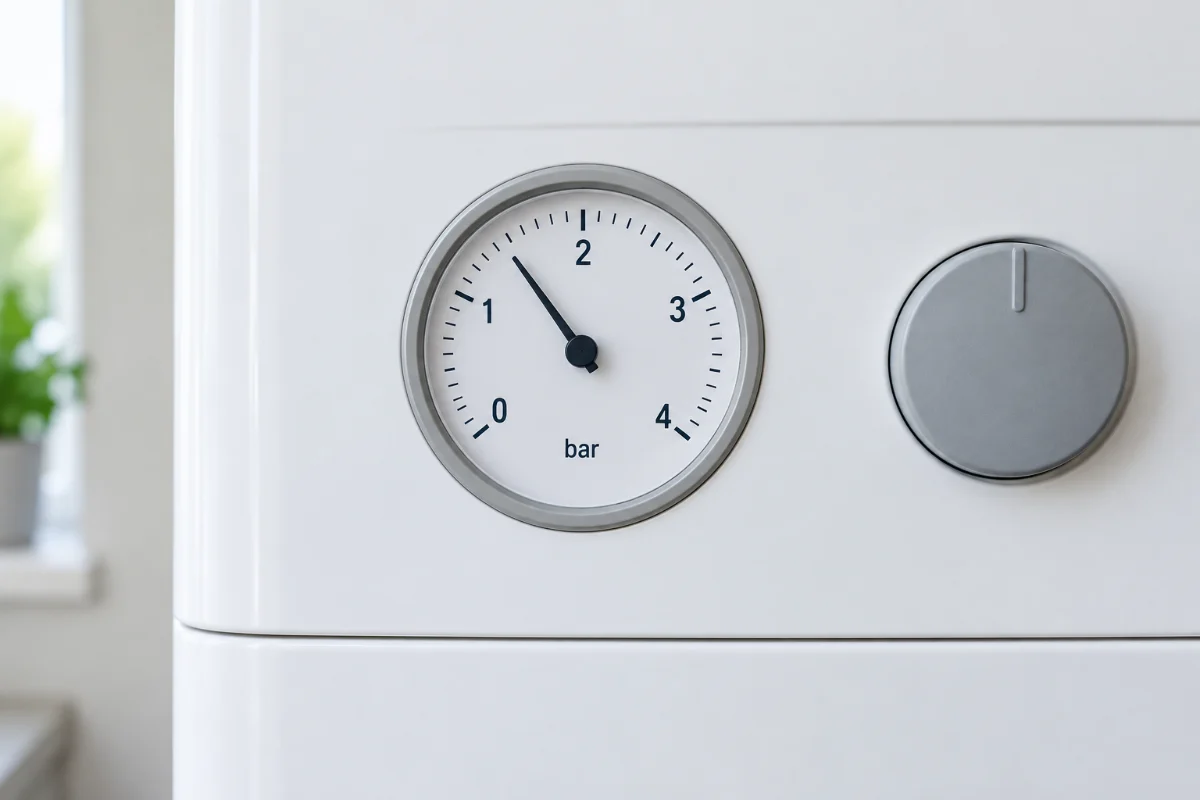
- Check the pressure when the system is cool and compare it with the manual’s recommended cold range. Do not assume every dial’s green area or fault code means the same thing.
- If water is leaking from the boiler, a control is damaged or the gauge is already too high, arrange help before adding more water.
- If you rent, report a recurring problem to your landlord or managing agent and follow their maintenance arrangements.
Step-by-step: check your filling arrangement
1. Let the heating cool and read the model instructions
Follow the manufacturer’s directions for switching off before filling. Keep the pressure gauge visible throughout. Do not work on hot radiators or open the boiler casing.
2. Identify the user-accessible filling controls
Some systems have a flexible external filling loop; others use a manufacturer-specific key or built-in lever. A hose, lever colour or valve position on someone else’s boiler is not enough to identify yours. Worcester Bosch shows external, keyed and keyless examples. Use the instructions for your model and fitted arrangement.
3. Follow the manufacturer’s filling sequence
If the manual confirms this is a householder task and you can identify every control, follow its connection and valve-opening sequence slowly. Stay beside the gauge. Do not force a stuck valve, undo unknown fittings or improvise a hose connection.
4. Stop at the specified cold pressure
Close the filling controls exactly as instructed when the gauge reaches the model’s cold filling target. Check that water has stopped entering. Follow any instructions for removing a filling key or disconnecting a temporary hose; do not leave a filling arrangement connected contrary to the manual.
5. Restart only as the manual directs
A reset is not always needed. If the manual asks for one, follow that model’s procedure. If the fault remains or pressure drops again, record the displayed code and arrange an inspection instead of repeatedly resetting or refilling.
What changes with a system boiler?
The filling point may be elsewhere on the heating pipework rather than underneath the boiler. Ask the installer to identify it if the user documents are unclear. An open-vented heating system with a feed-and-expansion tank does not use the same pressure top-up process; do not try to adapt these steps to it.
If you overfilled or the pressure is too high
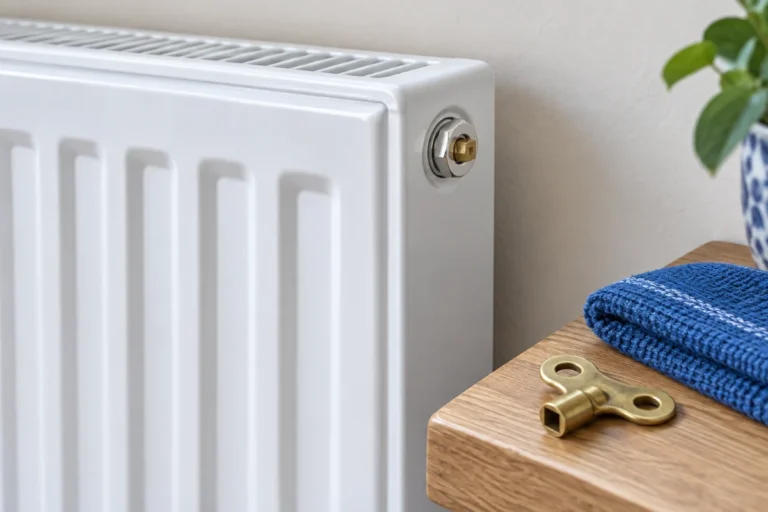
Stop filling and close the identified filling controls. Keep the heating off, let the system cool and check the manual. Baxi’s high-pressure guidance describes reducing pressure by bleeding a cool radiator and getting an engineer if the problem persists. Use that method only where it is suitable for your system and you can do it safely.
Do not treat a very high reading as harmless or rely on the pressure-relief valve to make continued use safe. If pressure keeps rising, a filling valve will not close, water discharges from a safety pipe or you are unsure what to do, contact a heating engineer. Do not operate, cap or obstruct a pressure-relief outlet.
When to stop and call an engineer
- You cannot identify the correct controls from the user manual.
- A control is seized, leaking or will not shut off.
- Pressure falls again after topping up or you need to refill repeatedly.
- There is water under the boiler, a persistent fault or an unusually high reading.
Repeated topping up does not repair a fault. Vaillant’s pressure-loss advice explains that leaks and internal faults can both be responsible. See our guide to recurring pressure loss for observations you can pass to an engineer.
Frequently asked questions
What pressure should my boiler be at?
Use the cold and operating ranges in your model’s user manual. The correct target and fault thresholds vary; a generic number is not a substitute for those instructions.
Where is the filling loop on a Worcester Bosch boiler?
It depends on the model and installation. There may be an external loop, a keyed filling link or a keyless control. The manufacturer’s user guide should show the permitted access point. Do not remove a sealed front casing.
How often should I need to top up?
A pressure change can follow bleeding a radiator. A recurring need to add water should be investigated, particularly if the loss is rapid. Record when it happens rather than assuming regular refilling is normal.
Need help with boiler pressure in Leicester?
Describe the boiler model, cold pressure reading, any error code and whether you have seen a leak. Our boiler repair enquiry page explains the next step. Request a callback or call 0116 488 6858. Enquiries are available 24/7; confirm attendance, charges and the work required before booking.