What Is a Power Flush? When It Helps and What to Ask
A power flush is a method of cleaning a central-heating system using a specialist pump and suitable cleaning chemicals. It can remove circulating debris and deposits, but an engineer should first assess the symptoms, water condition and system suitability. A boiler or radiator reaching a particular age does not automatically mean it needs power flushing.
By Plumber Leicester Pro editorial team · Checked . General guidance; use your appliance instructions for your model.
In this guide
What a power flush can and cannot do
Contamination can interfere with circulation and heating performance. Power flushing circulates cleaning fluid through the system to help dislodge and remove it. It cannot repair a failed valve, leaking pipe or damaged boiler part. Ask what has been checked before accepting cleaning as the diagnosis.
| Observation | Question to ask |
|---|---|
| Radiator cold at the bottom or in patches | Have circulation, valves and water condition been checked? |
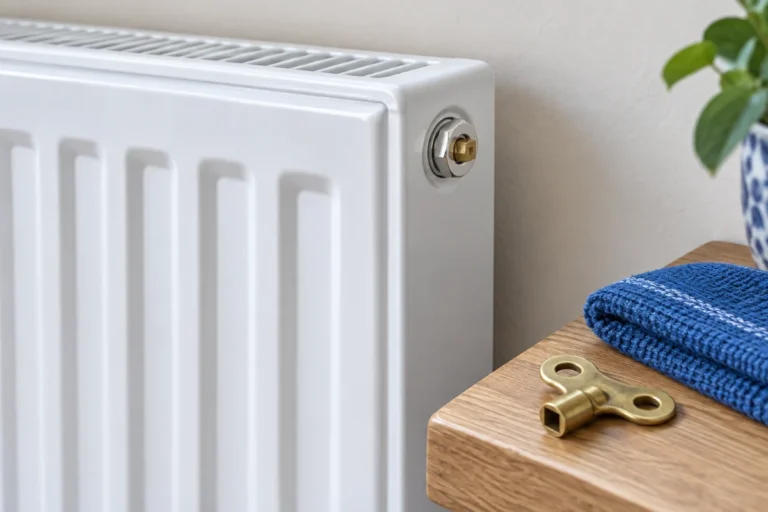
| Radiator cold mainly at the top | Could trapped air be involved, and is bleeding appropriate? |
| Boiler noise or uneven heating | What tests distinguish contamination from another fault? |
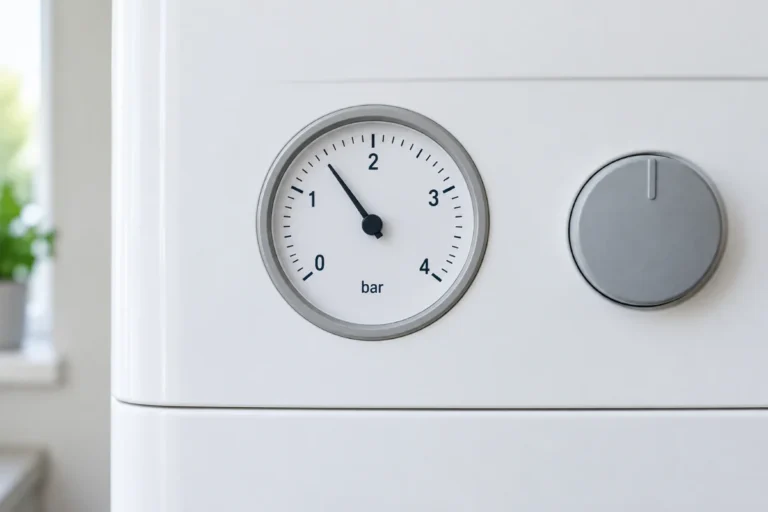
| Repeated pressure loss | Is there a leak or component fault that needs repair first? |
| New boiler proposed | What cleaning and protection does the new appliance require? |
See radiator bleeding and recurring pressure loss for safe observations. Avoid repeatedly adding water or chemicals to mask a problem.
Power flush, chemical clean or a targeted repair?
The right method depends on the installation and its condition. An engineer may recommend a suitable chemical cleaning process, a power flush, targeted radiator work or repair of a separate fault. Ask for the reason behind the choice. Do not accept a system-age threshold as the whole explanation.
Fernox’s heating-system cleaning guidance explains cleaning, flushing, checking the results and adding appropriate protection. Follow the boiler and treatment manufacturers’ requirements; a product instruction for one system should not be treated as a universal DIY recipe.
What happens during the work?
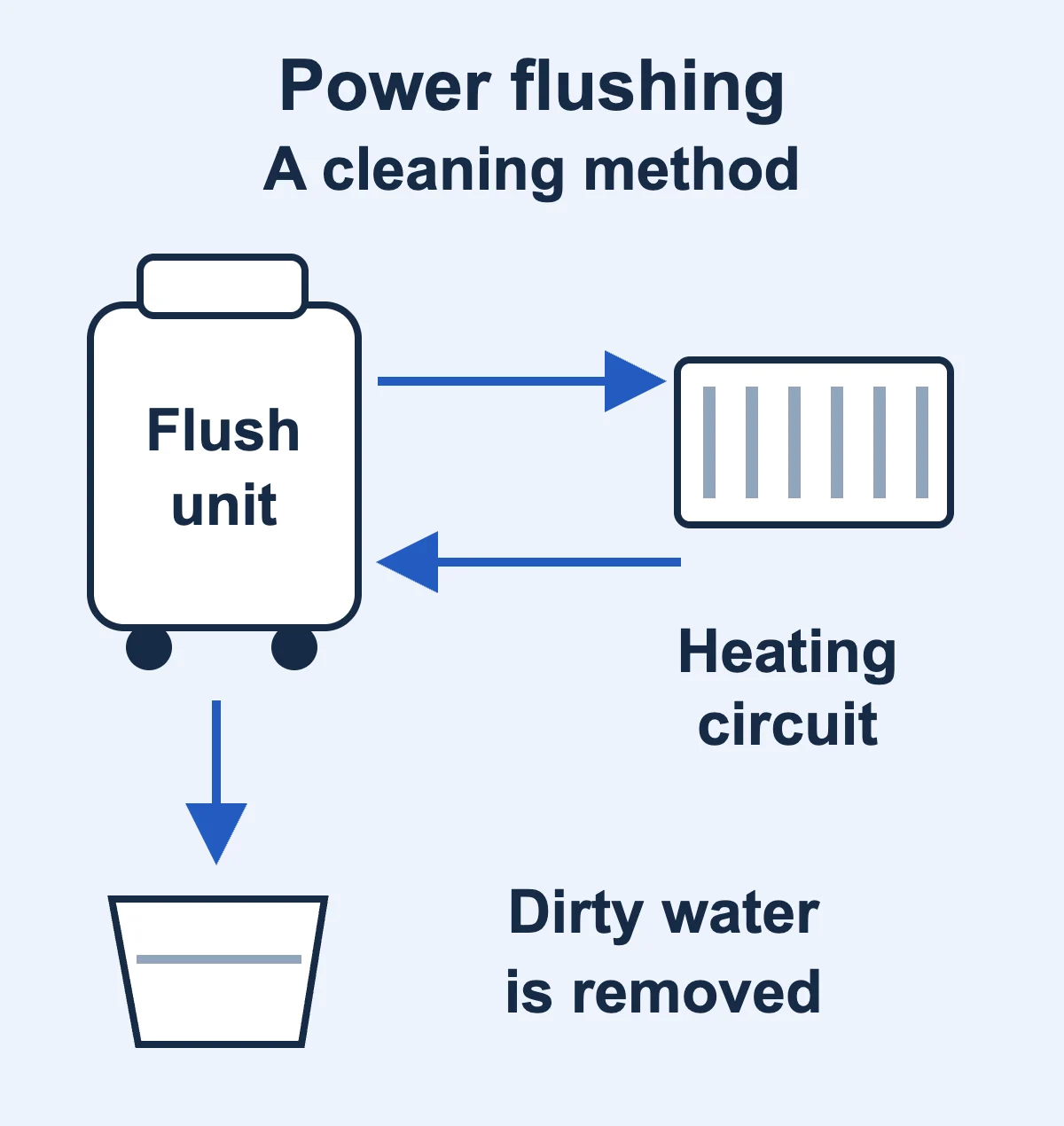
- Assessment: the engineer checks the system, symptoms and suitability, and explains existing weaknesses or leaks.
- Preparation: access and protection are arranged and the selected cleaning equipment is connected by the engineer.
- Cleaning: suitable treatment is circulated and removed using the chosen method, with attention to affected circuits and radiators.
- Verification: the engineer checks the flushing result and applies the required protection.
- Handover: heating operation is checked and you receive the record of work, treatment and any remaining faults.
This is an outline for discussing a professional service, not connection or dosing instructions. Do not attach hired flushing equipment to an unfamiliar system.
Can an older system be damaged?
Existing corrosion, weak joints or fragile components need assessment before cleaning. Ask what happens if a leak is discovered and whether any repairs would be a separate charge. Cleaning does not make a worn component sound; a proposed remedy should address the condition of the whole system.
How much does a power flush cost, and how long does it take?
Request a written quote for the number and size of radiators, system layout, access, contamination and chosen method. Ask whether chemicals, filter work, water checks, balancing and VAT are included. The supplier should explain the expected visit length and what could extend it. A generic price or fixed duration does not establish the scope of your job.
Does every new boiler need one?
A replacement installation needs the cleaning and water treatment required for that appliance and system. That does not establish that every system needs the same power-flushing process. Ask the installer to identify the requirement in the installation instructions and include the chosen method in the quote.
How often should inhibitor be added?
Check the treatment manufacturer’s instructions and the system’s service record. Fernox recommends checking inhibitor levels annually and topping up as required. Testing is different from adding another bottle every year. Draining or refilling can change the concentration, so tell the engineer about work carried out since the last treatment.
Will skipping a flush automatically void a guarantee?
Read the actual guarantee and installation conditions for the boiler. Water-quality failures or incorrect installation may affect cover under those terms, but a blanket statement about every guarantee is misleading. Ask for records of cleaning, treatment and commissioning, and keep them with your boiler documents.
Heating uneven or making unusual noises?
Describe the symptoms and any recent boiler, radiator or pipework changes. Ask for an assessment and a written explanation of the recommended remedy.
Call 0116 488 6858 Request a heating assessment
24/7 enquiries. The supplier confirms availability, the work and charges before you agree to a booking.