Toilet keeps running after flushing: what to check
If water keeps trickling into the toilet bowl after the cistern has finished refilling, the toilet may have a leak within its flushing or filling mechanism. Repeated refilling when nobody has flushed is another useful symptom to report. You do not need to dismantle the cistern to ask for a repair.
By Plumber Leicester Pro editorial team · Sources checked . General guidance; repairs depend on your fittings and property.
In this guide
First distinguish water running into the bowl from water escaping onto the floor, or a bowl that is filling towards the rim. Those situations need different next steps.
Which problem do you have?
| What you notice | What to do next |
|---|---|
| A short refill immediately after a flush, then silence and still water | Observe whether it stops as usual. Refill time varies between toilets; a short refill alone does not identify a fault. |
| A continuing trickle down the bowl, or refilling without another flush | Report a possible cistern leak and describe the pattern. The checks below can help you explain it. |
| Water on the floor or outside the cistern | Stop using the toilet and arrange a plumbing assessment. If there is an active escape, discuss urgent help. |
| The bowl is high, rising or slow to drain | Stop flushing and treat it as a possible blockage. Use the blocked-drain enquiry route. |
Do not keep flushing to test a rising bowl. If water is escaping near electrics or into a room below, keep clear of the affected area and explain that when asking for help.
Check without opening the cistern
Wait until a normal flush and refill have finished. Without flushing again, listen for continued filling and look for a small stream entering the back of the bowl. Note whether it is constant or stops and starts. If the leak is already obvious, you can report it straight away.
For a less visible leak, WaterSafe's leaky-loo guidance suggests a toilet-paper check. Place a small square of toilet paper against the back of the bowl, above the standing water, once the refill has finished. Leave the toilet unused and unflushed overnight. Paper that becomes wet or torn can indicate water passing down the bowl.
This is an observation, not a diagnosis of a particular part. If someone used or flushed the toilet, the result is not useful; report the sound or visible trickle instead. Skip the test if this is the only toilet and it cannot be left unused. Wash your hands afterwards.
A short video of the visible trickle or refill sound may help when describing the problem. Keep it focused on the fitting and do not include people or private documents in the background.
Why might the toilet keep running?
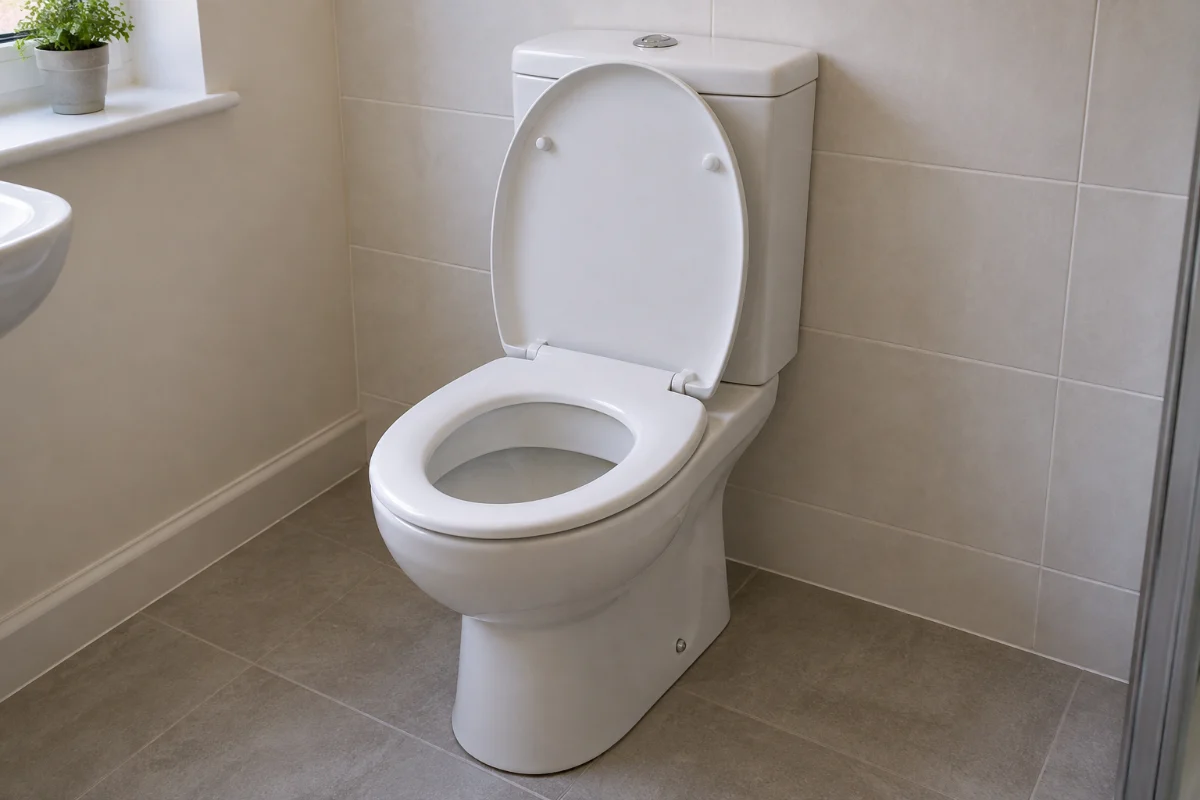
A cistern stores water for the next flush. Its flushing mechanism releases that water into the bowl, while its filling mechanism controls the incoming supply.
Possible faults include a flushing seal that is not closing properly, a filling valve that does not shut off as intended, or a control that is sticking. The correct diagnosis depends on the cistern's design. WaterSafe's running-toilet advice describes common mechanisms and symptoms.
Do not assume every toilet has the same float, chain or replaceable seal. A push-button cistern, a lever-operated system and a concealed cistern can need different parts and access methods. A symptom alone is not a reason to buy a universal repair kit or replace the whole toilet.
Can you stop the water temporarily?
If there is a clearly identified, accessible isolation valve serving only this toilet, you can close it gently if you know how and can do so safely. Do not force a stiff valve or experiment with other controls. Stop if the valve starts leaking.
Closing the toilet's supply is a temporary measure, not a repair. Tell anyone else at home that the toilet is out of use and that the cistern will not refill. Do not keep flushing it or use improvised filling methods while the problem is unresolved.
If there is an active water escape and you cannot safely isolate it, use the emergency plumbing enquiry page to discuss urgent help. Say whether it is the property's only toilet. A small internal trickle still deserves a repair, but describe its actual severity rather than assuming every running toilet requires the same response.
What to leave for the repair
Avoid removing a concealed flush plate, pulling a wall panel away or forcing a cistern lid that will not lift freely. Buttons and linkages can be attached to the lid. Find the make or model from existing paperwork or a visible label without dismantling anything.
Do not pour an improvised chemical treatment into the cistern or bend and adjust unfamiliar parts. Follow the manufacturer's care instructions. If you have already added a product or attempted a repair, give the plumber the details so they can work with the current condition.
Ask whether the fault can be assessed through the fitting's intended access point, whether compatible parts are available and what happens if further access is needed. Those questions help define the job before you agree to disruptive work.
If you rent, report it first
Contact your landlord or managing agent and follow their repair route. Explain whether water stays within the bowl or is escaping outside the fitting, and whether the toilet is still usable.
Agree who authorises a private repair and who will pay before booking. Leicester City Council tenants should use the council's repair-reporting service, which distinguishes emergency and routine reports.
What to tell the plumber and ask about the quote
Have these details ready:
- Your postcode and whether this is the only toilet.
- When the problem started and whether running is continuous or intermittent.
- Whether the water goes into the bowl or escapes onto the floor.
- Whether the cistern is exposed or concealed, and any readily available model information.
- Any isolation, products or repair attempts already made.
Ask what the visit or diagnostic charge includes, whether parts are additional and how extra work will be authorised. Confirm any out-of-hours charge, the VAT position and who will invoice you. There is no reliable fixed repair price from the phrase “toilet keeps running” alone.
Need help with a running toilet in Leicester?
Call 0116 488 6858 or send a plumbing enquiry. Describe the symptoms so the supplier can discuss the appropriate next step.
Plumber Leicester Pro handles enquiries 24/7. The supplier confirms coverage, attendance, the work and charges before you agree to a booking. For a landlord-managed repair, use the agreed repair contact first.