Why Is My Boiler Losing Pressure? Causes, Fixes & When to Call an Engineer
A boiler that repeatedly loses pressure needs its cause checked. Possible causes include a leak, water released after radiator bleeding, or a fault in the boiler’s pressure-control components. A gauge reading alone cannot tell you which one applies.
By Plumber Leicester Pro editorial team · Checked . General guidance; use your appliance instructions for your model.
In this guide
You can note visible symptoms without opening the boiler or adjusting its internal parts. This guide explains what those observations may mean and what to tell a heating engineer.
First — check the reading against your manual
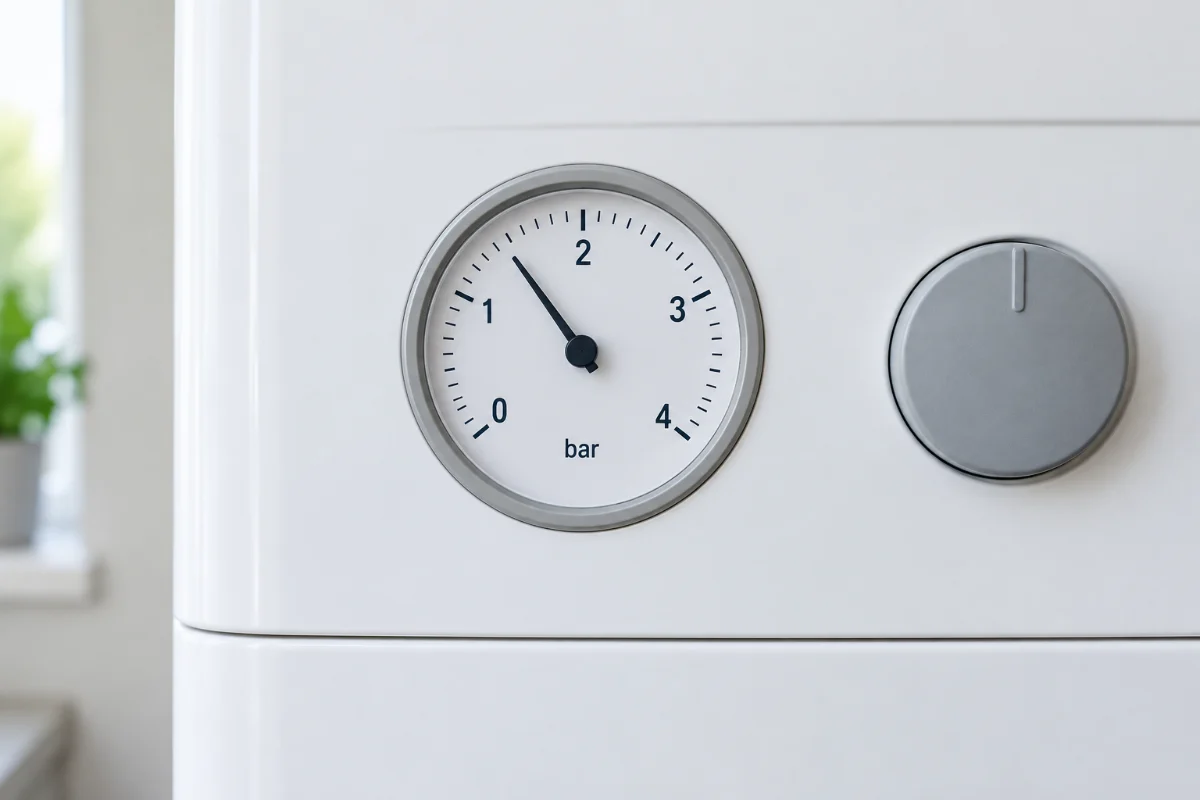
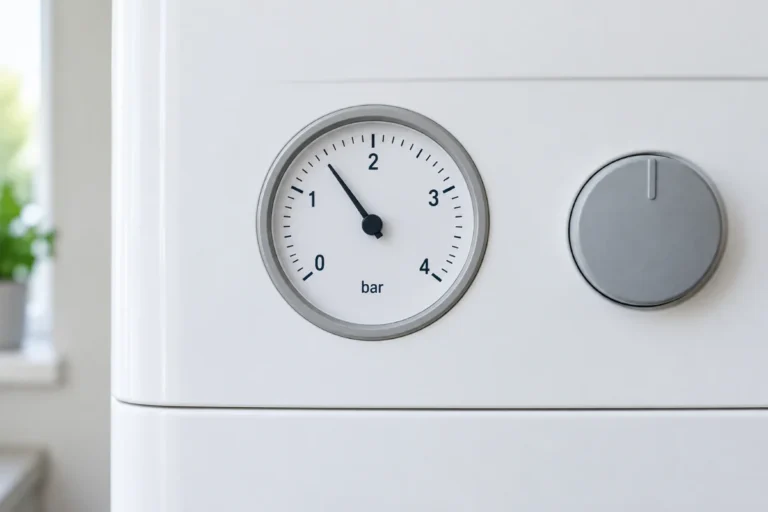
Read the pressure when the heating is off and the system has cooled. Record the value, time and any error code. Compare it with the recommended range in the exact user manual. Pressure changes as the heating warms, so compare readings taken under similar conditions.
Five possible causes
1. A leak in the heating system
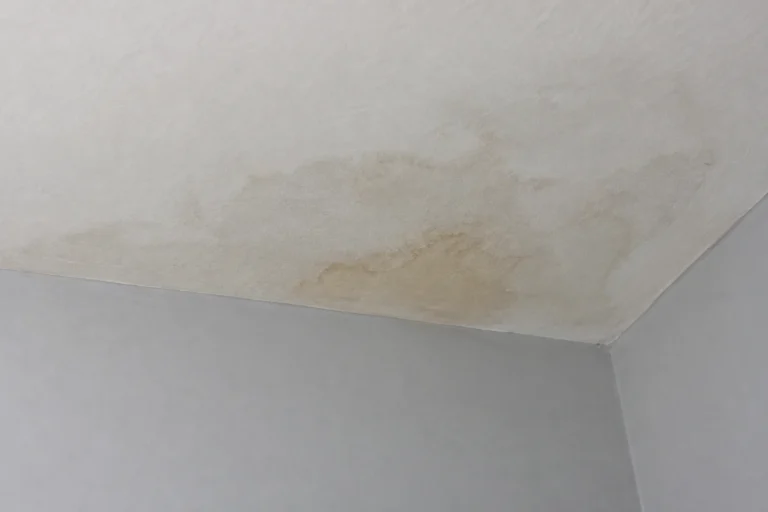
Look for visible drips, staining or damp near accessible radiator valves, exposed pipework and beneath the boiler. Avoid touching hot fittings or wet electrical equipment. Do not lift flooring, remove the casing or tighten an unknown joint as a diagnostic test. Vaillant advises using a qualified person for leaking pipework or internal boiler faults.
No visible leak does not prove that water is escaping under a floor. There may be an internal fault, discharge from a safety outlet or another cause that needs checking.
2. An expansion-vessel problem
The expansion vessel accommodates changes in water volume as the heating warms. A large pressure rise when hot followed by a low cold reading can be a clue, but it is not a diagnosis. Vaillant explains the expansion vessel’s role. An engineer needs to assess the vessel and the rest of the system. Do not attempt to recharge it or operate its valve yourself.
3. Discharge through the pressure-relief valve
The pressure-relief valve is a safety component. Water from its discharge pipe may indicate excessive pressure, a valve problem or another fault. Keep clear of discharging water, which may be hot. Do not tap, turn, block or replace this valve. Vaillant recommends professional investigation of a leaking pressure-relief valve.
Condensate is different. A condensing boiler produces condensate during normal operation. Water in a condensate drain is not, by itself, proof that the heating system is losing pressure. See the manufacturer’s explanation of condensate. If you cannot identify an outlet, describe what you can see to an engineer instead of assuming it is the safety discharge.
4. A radiator has recently been bled
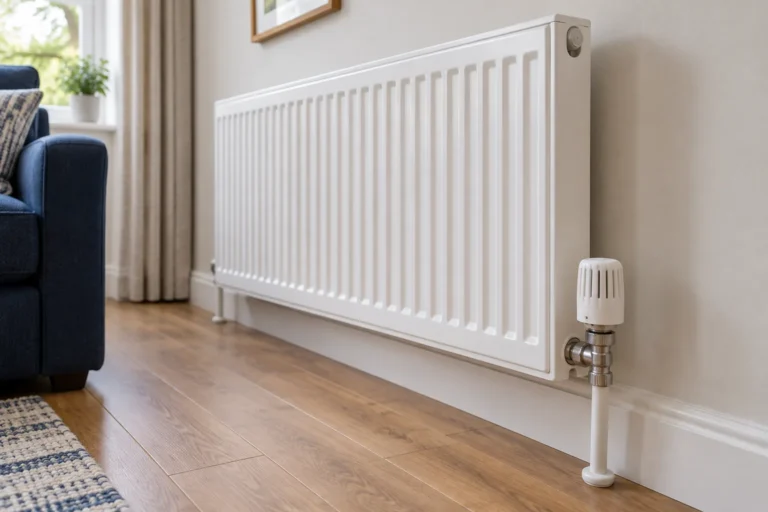
Bleeding can reduce sealed-system pressure. If your manual permits a householder top-up, follow its instructions and then monitor the cold reading. A continuing drop needs investigation rather than repeated refilling. Our guides cover radiator bleeding and checking the correct boiler filling procedure.
5. A gauge or pressure-sensor fault
An erratic or unchanging reading is another reason to stop adding water and arrange a check. An engineer can compare the reading with the actual system pressure; do not assume a low display means it is safe to keep filling.
What to do with the symptoms you see
- Pressure changed after radiator bleeding: check the user manual and monitor it after any permitted top-up.
- A visible leak: note its location and arrange a repair; avoid adjusting unknown fittings.
- Very high pressure, a valve that will not close or a safety outlet discharging: stop filling and seek help.
- Pressure keeps falling with no visible cause: arrange a diagnosis; there is no reliable online test that identifies the failed part.
When to stop using DIY checks
Leave internal boiler work to an appropriately qualified Gas Safe registered engineer. A water leak from the appliance, recurring lockouts or an abnormal pressure reading needs attention; do not rely on the boiler’s automatic cut-out as permission to continue using a faulty appliance.
Frequently asked questions
Can I keep using a boiler that loses pressure?
That depends on the fault and the manufacturer’s instructions. We cannot confirm that it is safe from a pressure reading alone. Arrange a check if pressure repeatedly falls, the boiler leaks or faults return after a reset.
Can cold weather explain the problem?
Record whether it happens only when the heating runs, but do not dismiss recurring pressure loss as weather. The pattern can help an engineer investigate; it does not identify a particular part.
Can I keep topping it up?
Refilling does not repair a leak or failed component. If the problem returns, use the manual’s fault instructions and arrange an inspection instead of making top-ups a routine.
How much will the repair cost?
The cause, access, parts and time required affect the quote. Ask whether the initial diagnostic visit is chargeable and whether a proposed repair includes parts, labour and VAT where applicable. Confirm charges before agreeing to work.
Arrange a boiler repair enquiry in Leicester
Have the boiler model, pressure readings, error code and details of any visible leak ready. Use our boiler repair page to explain the problem. Request a callback or call 0116 488 6858. Enquiries are available 24/7; confirm attendance, charges and the work required before booking.