Blocked toilet: what to do before you flush again
If your toilet is blocked, stop flushing. Another flush can raise the water level and send it over the rim. Keep the toilet out of use while you check whether the problem affects just this bowl or other drains too. Repeated flushing is not a safe way to test a blockage.
By Plumber Leicester Pro editorial team · Sources checked . General guidance; repairs depend on your fittings and property.
In this guide
For help in Leicester, our blocked-drain enquiry page explains how to discuss the symptoms and agree the next step. First, use the guide below to decide whether a simple check is appropriate or you need help now.
Check these three things first
| What you notice | What to do next |
|---|---|
| The bowl is nearly full, overflowing or filling again without another flush | Stop using it and arrange urgent help. Tell the person you contact exactly what is happening. |
| Only this toilet is affected, the level has fallen and there is no overflow | Read the limited plunger guidance below. You can also ask a plumber to deal with it. |
| Other fixtures are backing up, an outside drain is overflowing or neighbours have similar trouble | Report those symptoms. There may be a wider drainage problem; check the water-company route below. |
Do not run taps or appliances simply to test drains that are already backing up. If this is your only toilet, say so when requesting help; the same applies if someone at home has additional care needs.
Can you try a toilet plunger?
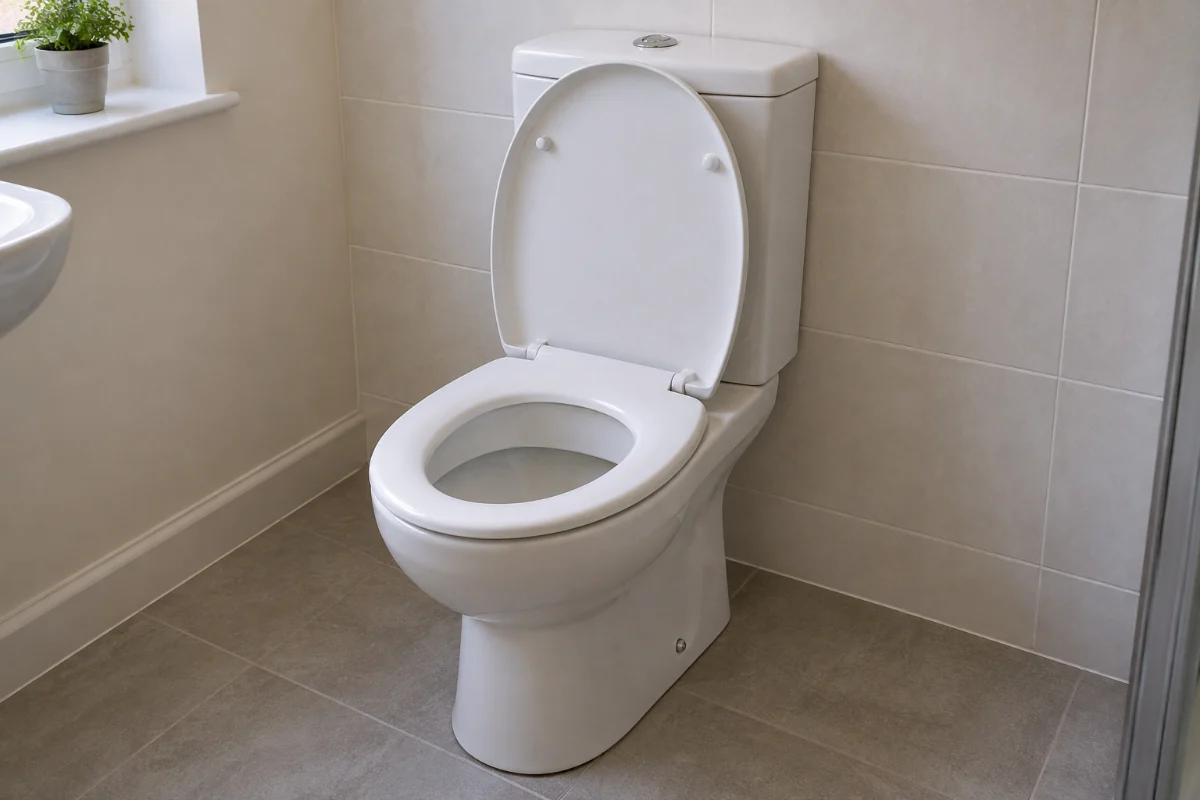
This section is for a standard toilet, not a macerator or pumped toilet. Skip it if the bowl is very full, the toilet is damaged, a hard object may be stuck, chemicals have been added, or you are unsure what type of toilet you have.
Wear long rubber gloves and eye protection, keep nearby items away from splashes, and use a plunger intended for toilets. The Chartered Institute of Plumbing and Heating Engineering's blocked-toilet guidance explains the precautions and advises professional help if you are uncomfortable doing the task.
- Wait for the level to fall. Do not add more water to a bowl that may overflow. If the level stays high, stop and arrange help.
- Cover the outlet with the plunger cup. Follow the tool's instructions and keep the cup under the water already in the bowl. If you cannot establish a seal, stop.
- Use gentle push-and-pull movements. Avoid forceful splashing. Stop if the level rises, the fitting moves or there is no improvement after a short attempt.
- Check the result cautiously. Only after the bowl has drained back to its usual level and the obstruction appears cleared, try one normal flush while watching it. If the water rises abnormally, do not flush again.
Clean the equipment and affected surfaces afterwards, then wash your hands. A toilet that blocks again needs investigation; a brief improvement does not establish that the underlying problem is resolved.
When to stop trying home remedies
Do not pour boiling water, chemical unblockers or a mixture of cleaning products into the bowl as an improvised fix. If you have already used a product, stop further attempts and tell the plumber its name. Keep the packaging so they can check the ingredients and precautions.
A macerator is a powered unit that pumps toilet waste away. Do not plunge, open or dismantle a blocked macerator. Follow its manufacturer instructions and arrange an appropriate repair. CIPHE's guidance specifically directs owners of blocked mechanical toilets to professional help.
Avoid poking coat hangers or improvised rods into the toilet, removing it from the floor or lifting drain covers to investigate. Describe the problem from a safe position instead. These checks are not a reason to handle sewage or enter a drain chamber.
Should you contact a plumber or Severn Trent?
A blockage affecting one toilet may be within the property's plumbing. Several affected fixtures or neighbouring properties are a reason to investigate the wider drainage route; those observations do not prove exactly where the blockage is.
If Severn Trent is your wastewater provider, ask it to check responsibility for a suspected shared or public sewer problem. Its sewer-flooding guide explains the distinction between private drains, shared sewers and lateral drains. A pipe being inside your boundary does not, by itself, settle who maintains it.
For suspected flooding from Severn Trent's public sewer network, call 0800 783 4444. Its emergency line operates 24 hours a day. Keep children and pets away from sewage, and follow the advice given. Check your bill if you are unsure which company provides your wastewater service. Road gullies have a different reporting route, explained on Severn Trent's responsibility page.
If you rent your home
Report the blockage to your landlord or managing agent and follow their repair arrangements. Say if there is an overflow or no other usable toilet. Before booking a private visit, agree who authorises the work and who will pay; do not assume you will be reimbursed.
Leicester City Council tenants should use the council's repair-reporting service, which explains its emergency and routine routes. That service is for council housing, not every rented home in Leicester.
What to tell the plumber before a visit
Have these details ready:
- Your postcode, when the problem started and whether this is the only toilet.
- Whether the bowl drains slowly, stays full or overflows.
- Whether other fixtures or neighbouring homes are affected.
- Whether the toilet has a macerator and whether anything unusual was flushed.
- Any attempts already made, including the exact cleaning products used.
Ask about the visit or diagnostic fee, any out-of-hours charge, what work is included and how additional work will be agreed. Confirm the VAT position and who will invoice you. A symptom description alone cannot establish the equipment needed, final price or whether one visit will resolve it.
How to reduce the chance of another blockage
Use the toilet for human waste and toilet paper. Put wipes, sanitary products, nappies and kitchen paper in the bin. Water UK's Bin the Wipe guidance explains why wipes should stay out of the sewer system.
If the toilet repeatedly drains slowly despite normal use, report the pattern. Ask for the cause to be assessed before paying for another assumed quick clearance.
Need help with a blocked toilet in Leicester?
Call 0116 488 6858 or send a plumbing enquiry. If water is escaping now, use the emergency plumbing page to discuss urgent availability.
Plumber Leicester Pro handles enquiries 24/7. The supplier confirms coverage, attendance, the work and charges before you agree to a booking. For a suspected public sewer problem or a landlord-managed repair, use the appropriate contact above.