Water leaking through the ceiling: what to do first
If water is coming through your ceiling, keep people away from the affected area and stop using the bathroom or appliance above it if you can do so safely. A bulging ceiling, falling plaster or water near lights and sockets needs urgent attention. Do not stand underneath to investigate.
By Plumber Leicester Pro editorial team · Sources checked . General guidance; repairs depend on your fittings and property.
In this guide
The first job is to reduce the immediate risk and report the symptoms. Finding the source, drying the building and redecorating are separate steps. For an active plumbing leak in Leicester, use our emergency plumbing enquiry page to discuss help and availability.
What to do in the first few minutes
| What you can see | Your next step |
|---|---|
| Water near a light, switch, socket or electrical appliance | Keep clear of the water and affected fittings. Arrange electrical safety advice as well as help with the leak. |
| The ceiling is sagging, bulging, cracking or shedding plaster | Keep the room out of use and arrange urgent assessment. Do not poke, drill or stand beneath it. |
| A small drip, with no ceiling damage or nearby electrics | Only if the area is safe to approach, place a container beneath it and move nearby belongings. Report the leak promptly. |
| A stain with no visible dripping | Record when you noticed it and whether it changes. A dry-looking patch does not establish that the source is repaired. |
Do not climb into an unsafe loft or remove ceiling panels to follow the water. If there is immediate danger to life, leave the danger area and call 999.
If water is near electrics
Do not touch a wet switch, light fitting or appliance, and do not walk through water to reach the fuse box. Turn off the electricity only if you can reach and operate the main switch safely from a dry position. If that is uncertain, keep clear and get professional help.
Electrical Safety First's flood guidance explains why water-damaged electrical installations and appliances need assessment. A leak stopping does not make affected electrics safe to use again. Ask a registered electrician to check them before use; a plumbing repair does not replace that check.
Can you turn off the water?
If you know where the property's internal water stop tap is, and it is safely accessible, close it gently to reduce the incoming supply. Do not force a seized valve or experiment with unidentified controls. Tell the plumber whether you managed to shut it and whether the drip changed afterwards.
Severn Trent's leakage guidance explains the internal stop-tap route and what to do if it cannot be operated. If Severn Trent supplies your water and you cannot isolate an active leak, explain this when reporting it to the company. Check your bill if you are unsure who supplies the property.
Water already in a tank, pipe or the ceiling can continue to escape after the incoming supply is closed. Continued dripping therefore does not prove that the valve failed. Equally, closing the water supply will not stop rain entering through a roof.
Avoid running the shower, flushing a toilet or starting a washing machine simply to reproduce the leak. Keep any suspected fixture out of use until it has been assessed.
Is it a bathroom leak, a pipe or the roof?
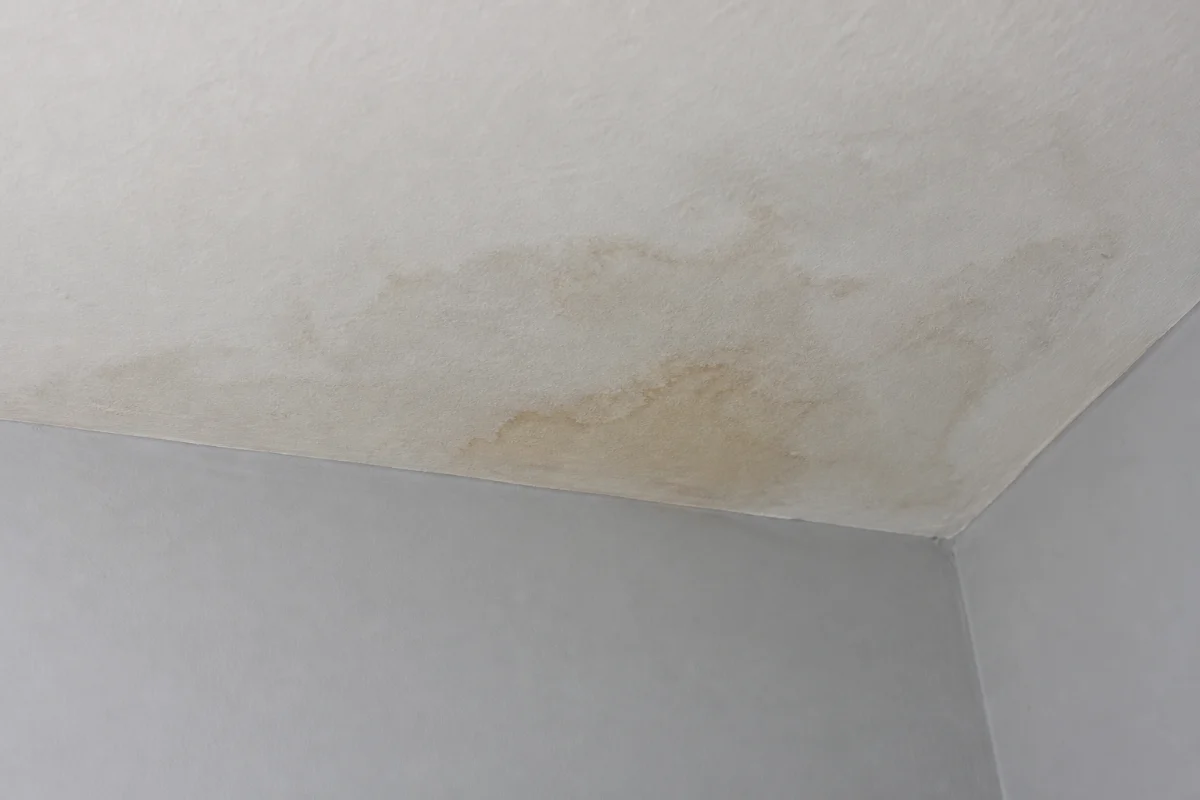
Describe the pattern you have already noticed. These clues help someone plan an investigation; they do not confirm a diagnosis.
- It appeared during or after a bath or shower: report which fixture was used and when the drip began. Supply plumbing, waste connections and water escaping around the bathing area need different repairs.
- It continues when no water is being used: mention that. A concealed supply leak is one possibility, but water retained in the building can also keep dripping.
- It appeared during rain: say whether it followed heavy rain or wind. The roof or building exterior may need checking rather than a bathroom repair.
- There is another flat above: contact that occupier and the building manager through a safe, normal route. Access to another home or shared services may need arranging.
Do not assume the damaged patch sits directly underneath the fault. The person investigating may need to inspect another part of the building. Our leak enquiry page explains the observations to report before agreeing an assessment.
If you rent, or live in a managed building
Contact your landlord, letting agent or building manager promptly. Say whether water is still entering, whether the ceiling has changed shape and whether electrics may be affected. Use their emergency repair contact where appropriate.
Before arranging private work, establish who can authorise access and repairs, and who will pay. Do not enter another flat, operate its controls or authorise work to a shared system without permission. Leicester City Council tenants can use the council's repair-reporting service.
Once everyone is safe, check your own insurer's reporting and emergency-help instructions. Cover, excesses and authorisation requirements depend on the policy and circumstances. Keep photographs taken from a safe position, the time the leak started, messages and receipts. Do not assume that every plumbing repair or ceiling repair will be covered.
What to tell the person arranging the repair
Prepare a short description:
- Your postcode, property type and which room is affected.
- Whether water is dripping now, and whether the ceiling is bulging or damaged.
- Any affected lights, sockets or appliances, without touching or testing them.
- What is above the patch, and any link you noticed to rain or water use.
- Whether the internal stop tap was closed and what changed afterwards.
- Who can provide access, including to an upstairs flat if relevant.
Ask what the initial visit covers, whether there is a diagnostic or out-of-hours charge, and how any opening-up or further work will be agreed. Confirm the VAT position and who will invoice you. Discuss plumbing, electrical assessment and ceiling reinstatement separately so you know which work is included.
When can you repair or paint the ceiling?
Arrange for the source and the damaged area to be assessed first. Ask what needs drying or replacing, and whether any affected electrical fittings have been cleared for use. Painting over a stain cannot establish that a hidden leak has stopped or that the ceiling is sound.
Keep a record if the patch returns or grows after the repair, and report it to the person responsible for the work. Do not use the absence of a drip alone as the completion check.
Need help with a ceiling leak in Leicester?
Call 0116 488 6858 or send a plumbing enquiry. Describe any active water escape or safety concern at the start of the conversation.
Plumber Leicester Pro handles enquiries 24/7. The supplier confirms coverage, attendance, the work and charges before you agree to a booking. A roof fault, unsafe electrics or a managed-building problem may also need the appropriate specialist or responsible organisation.