Combi vs System Boiler — Which Is Right for Your Home? UK Guide 2026
A combi heats hot water on demand; a system boiler normally works with a separate hot-water cylinder. The better option depends on measured water supply, simultaneous hot-water demand, available space and the existing installation. Bathroom count alone cannot decide it.
By Plumber Leicester Pro editorial team · Checked . General guidance; use your appliance instructions for your model.
In this guide
This guide compares the practical choices and the questions to raise during a survey. For a local enquiry, see new boiler options in Leicester.
What each boiler does
Combi boiler
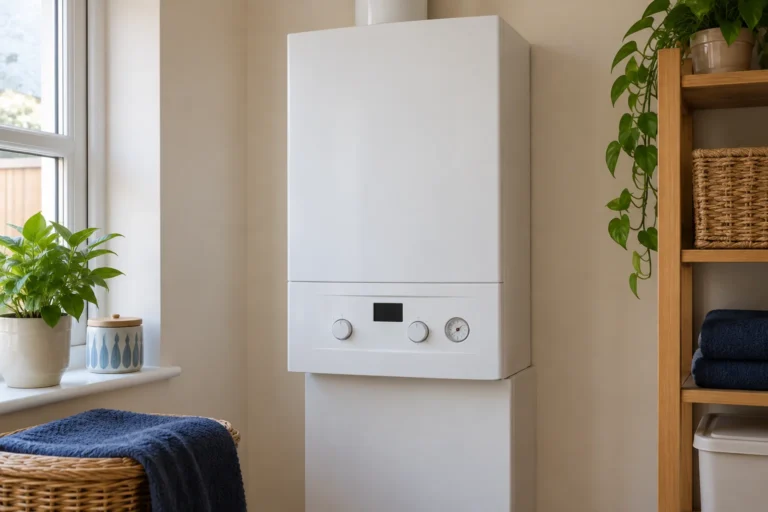
A combi supplies central heating and heats mains water for hot taps as it is needed. It normally removes the need for a separate hot-water cylinder. That can save space, but the available hot-water flow depends on the incoming supply and the boiler’s performance. See Worcester Bosch’s boiler-type explanation.
System boiler
A system boiler supplies the heating circuit and heats stored domestic hot water through a suitable cylinder arrangement. The heating water and water supplied to the taps remain separate. The cylinder takes space and needs appropriate sizing, controls and maintenance.
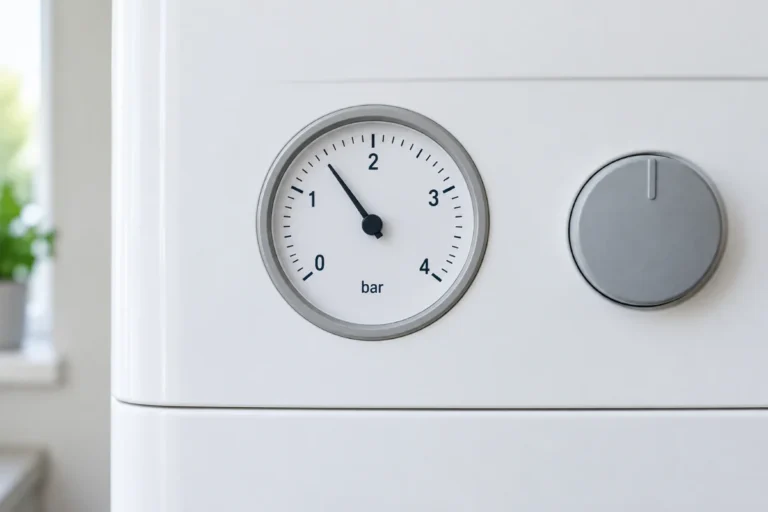
Stored hot water can suit households using several outlets together. It does not create unlimited flow: cylinder capacity, recovery, pipework and the incoming supply still matter. Worcester Bosch explains why mains pressure and flow affect performance.
Quick comparison
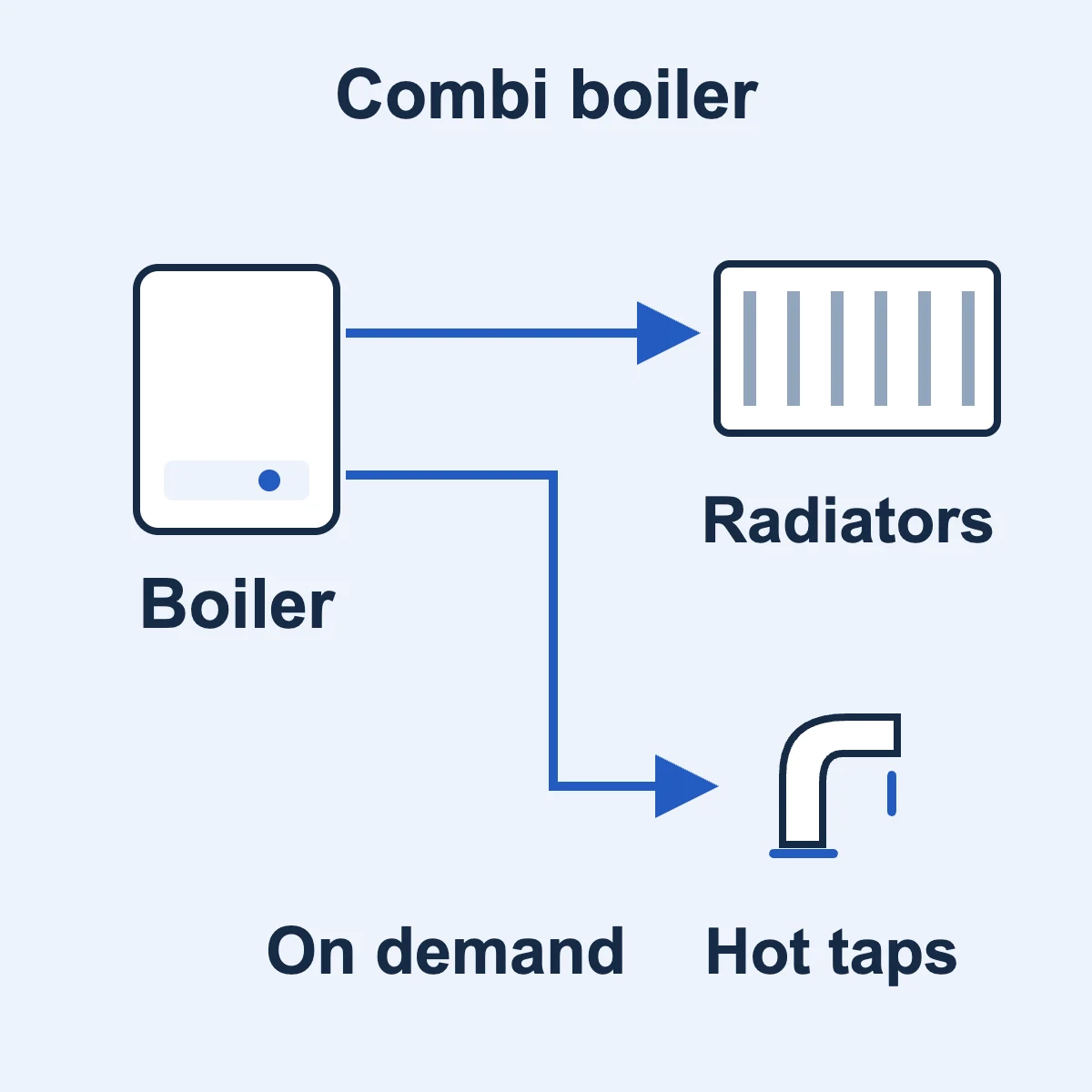
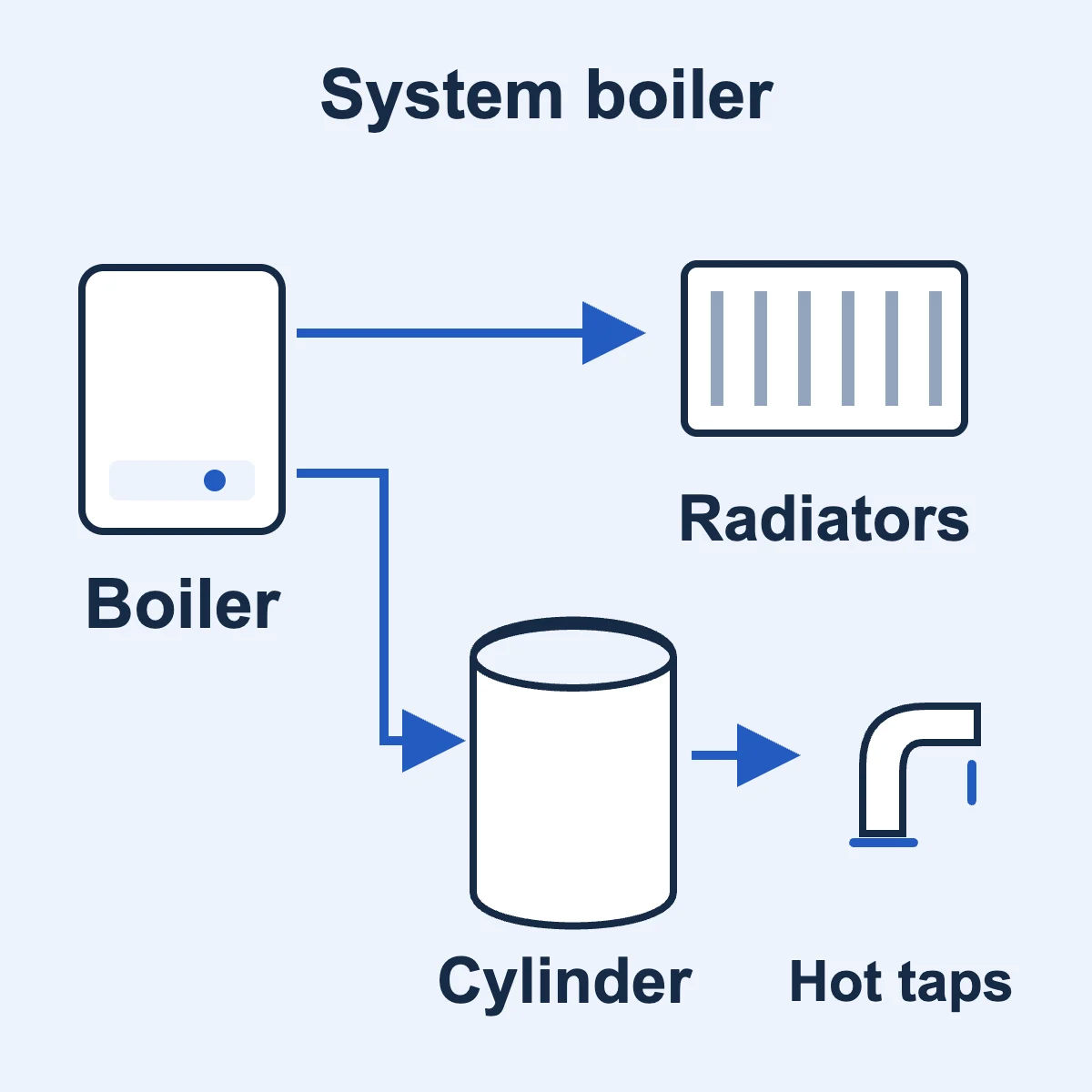
Simplified diagrams: arrows show the services supplied; pipework, valves and separate water circuits are omitted. Manufacturer’s boiler-type guide.
- Space: a combi usually avoids a separate cylinder; a system arrangement needs suitable cylinder space.
- Several hot outlets: compare simultaneous demand against measured supply and the proposed boiler/cylinder performance.
- Waiting at a tap: either arrangement can have a delay while cooled water in the pipe reaches the outlet. A combi does not guarantee instant hot water at a distant tap.
- Running costs: compare the full system, controls, insulation and usage. There is no universal annual saving simply from choosing one type.
- Installation cost: changing the system layout can add work. Compare written quotes covering the same work.
Can a combi run a power shower?
A pumped power shower must not be treated as a mains-compatible mixer shower. Mira says its power showers require a conventional gravity-fed supply with a cold-water cistern and hot-water cylinder, and are not compatible with a combi. Increasing boiler output does not change that. Check Mira’s power-shower compatibility guidance.
A suitable mixer shower may work with a combi, subject to the shower manufacturer’s requirements and the available supply. Give the installer the exact shower model before changing the boiler or cylinder. Do not assume an existing shower or pump can be retained.
What to check during a survey
- Which taps, baths and showers are used at the same time?
- What pressure and flow are available while water is being used?
- What is the home’s heating requirement, and how will the proposed boiler be sized?
- Can the existing pipework, cylinder, controls and showers work with the proposed arrangement?
- Where can a cylinder, boiler, flue and condensate pipe be fitted safely and maintained?
- What is included in the quote: removal, pipe changes, controls, cleaning, commissioning and documentation?
Frequently asked questions
Can I switch from a system boiler to a combi?
Often, but a survey must establish whether the combi can meet your hot-water needs and work with existing outlets. Removing a cylinder and changing pipework can add cost and disruption; ask for the complete scope.
Can I switch from a combi to a system boiler?
It may be possible where there is suitable cylinder space and the installation can be adapted. This can be worth discussing when demand changes, such as adding a bathroom, rather than assuming every larger home needs the same solution.
What about a regular or heat-only boiler?
A heat-only boiler can be part of a system with separate pumps, controls and a hot-water cylinder. Some existing arrangements also use loft tanks. Ask the installer which parts should be retained or changed; the boiler name alone does not describe the whole installation.
Is “condensing” another alternative to combi or system?
No. Condensing describes how the boiler recovers heat, while combi and system describe how heating and hot water are supplied. A boiler can be both combi and condensing. Our combi versus condensing guide explains the distinction.
Compare boiler options for your Leicester home
Describe the existing boiler, number of bathrooms, usual hot-water demand and whether there is a cylinder. Ask for a survey and comparable written options before deciding. Request a callback or call 0116 488 6858. Enquiries are available 24/7; confirm attendance, charges and the work required before booking.