How to Bleed a Radiator Safely
Bleeding can help a radiator that is warm at the bottom but cold at the top. Switch the heating off and let it cool fully. If you can identify the bleed screw and have the correct key, open it slightly to release trapped air, then close it when water flows steadily. Afterwards, check your system’s pressure using its own user instructions.
By Plumber Leicester Pro editorial team · Checked . General guidance; use your appliance instructions for your model.
In this guide
A cold radiator is not always an air problem. A faulty valve, poor circulation or contamination may need a different repair. This guide covers accessible radiator bleed screws; it does not involve opening a boiler or dismantling a valve.
What you need
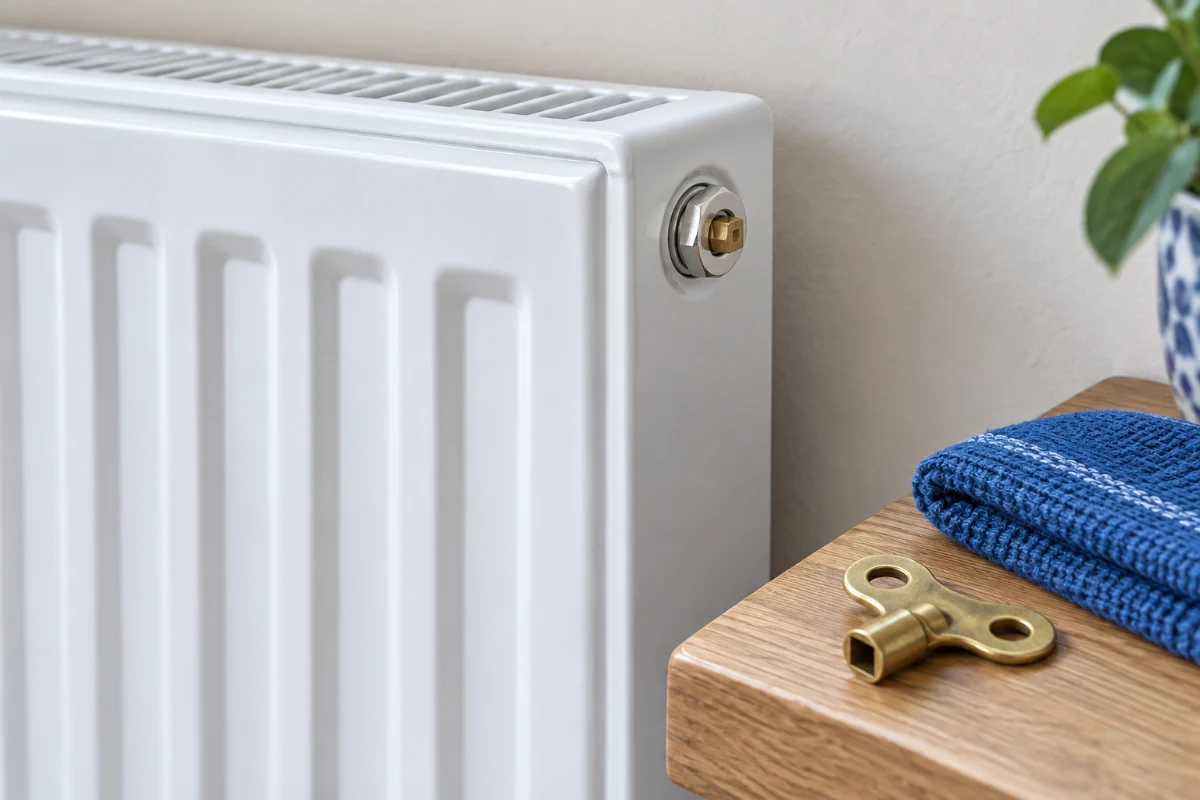
- Bleed screw: the small central screw in this example’s upper fitting. Leave the larger surrounding plug in place.
- Radiator key: its socket must fit your bleed screw securely.
Illustrative example; radiator fittings vary. Follow your radiator instructions and let the heating cool fully first. Manufacturer guidance.
- A radiator key that fits your bleed screw, or the alternative tool specified by the radiator manufacturer.
- A cloth and small container to catch water.
- Clear access and time for the heating to cool.
- Your boiler or heating-system user instructions for the check afterwards.
Do not force a key that slips. A seized, rounded or leaking screw is a reason to stop and ask a plumber. If you rent, follow your landlord’s repair arrangements and report a recurring problem.
How to bleed the radiator
- Let the heating cool. Turn it off and wait until the radiator is cool to the touch. Keep children away from the work area.
- Identify the bleed screw. It is usually near a top corner. The larger fittings and valves at the bottom are not the bleed screw. Consult the radiator instructions if you are unsure.
- Protect the floor. Hold a cloth and container beneath the outlet. Fit the correct tool securely.
- Open only slightly. Turn the bleed screw gently anticlockwise. You may hear air escaping. Never unscrew it completely.
- Close when water flows steadily. Turn clockwise gently. Do not overtighten. Wipe the area and check for drips.
- Check and restart. Follow the pressure-check guidance below, then restart as the system instructions allow. Check whether the radiator heats evenly.
These steps follow Worcester Bosch’s radiator-bleeding guidance. Your radiator’s own instructions take priority where the fitting differs.
Check boiler pressure afterwards
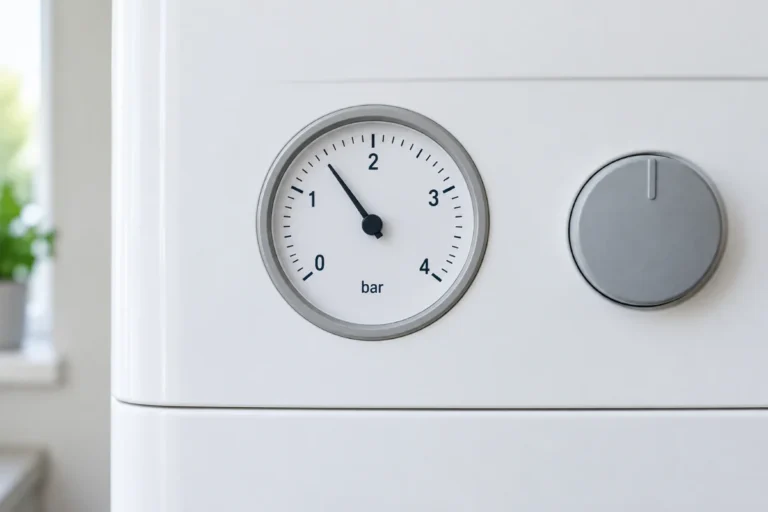
On a sealed heating system, bleeding may lower the pressure. Read the gauge with the system cool and compare it with the range in your boiler’s user manual. Add water only if the manual says it is needed and you can identify the correct householder filling controls. An open-vented system is different; do not apply sealed-system filling steps to it.
Worcester Bosch shows different external, keyed and keyless filling arrangements. There is no universal “open both taps” procedure or one pressure target for every boiler. See our manual-first top-up guide. If the pressure repeatedly falls, a control will not close or you cannot identify the arrangement, stop and arrange an inspection.
What if the radiator is still cold?
| What you notice | What to do next |
|---|---|
| Cold mainly at the top | Bleeding may help if trapped air is present. Check whether the warmth improves afterwards. |
| Cold at the bottom or uneven patches | Ask for a circulation and water-quality assessment; do not assume a power flush is the only answer. |
| One radiator stays cold | Report whether the other radiators work and whether any controls were changed. Avoid forcing a stuck valve. |
| Repeated air, pressure loss or a leak | Record when it happens and request a heating inspection. Repeated bleeding does not repair the cause. |
Dark radiator water alone does not tell you which cleaning method or repair is suitable. The engineer needs to consider the system’s condition and other symptoms. Our power-flushing guide explains the questions to ask before agreeing to cleaning.
Common questions
Must I bleed every radiator every year?
Check how the radiators heat up and follow your system instructions. Bleed an affected radiator when appropriate; a recurring need for bleeding deserves investigation rather than a fixed routine.
Which radiator should I do first?
Follow any sequence in your heating-system instructions. There is no need to invent a universal order for every layout. Note which radiators are affected so you can compare the result.
What if the screw will not close or keeps dripping?
Stop using force and ask a plumber for help. Keep clear of hot water and protect the area only if you can do so safely.
Radiator still not heating properly?
Tell us which radiators are affected, whether the boiler shows a fault, and whether pressure keeps dropping.
Call 0116 488 6858 Ask about heating repair
24/7 enquiries. The supplier confirms availability, the work and charges before you agree to a booking.